
When the Sun Goes Down in Serengeti National Park
There is a moment in the Serengeti that words rarely capture perfectly. A moment when the endless golden plains begin to cool, the dust settles softly behind safari vehicles, and the African sun slowly melts into the horizon like fire disappearing into the earth.
This is not just sunset.
This is the Serengeti after hours — when nature changes its rhythm and the wild begins to whisper a different story.
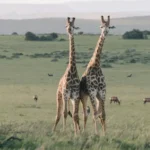
For many travelers visiting Tanzania for the first time, daytime game drives are unforgettable. Seeing lions resting under acacia trees, elephants crossing open grasslands, or giraffes moving gracefully against the sky feels almost unreal. But when the sun goes down in the Serengeti, something even more magical begins.
The Serengeti at Sunset: Nature’s Greatest Cinema
As evening approaches in Serengeti National Park, the landscape transforms completely. The harsh daytime heat fades into a gentle breeze, painting the savannah in shades of orange, red, gold, and deep purple.
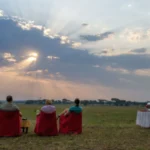
Safari travelers often stop their vehicles on a quiet hill just to watch the sunset. No city noise. No traffic. No buildings. Only the sounds of nature and the endless horizon stretching beyond imagination.
At this hour, photographers become silent. Couples hold hands. Friends stop talking for a moment. Everyone watches the same masterpiece created by Africa itself.
The Serengeti sunset is not just beautiful — it feels emotional.
When Predators Wake Up
During the day, many predators spend their time resting. The African heat can be exhausting, especially for big cats. But as darkness slowly covers the plains, the wild changes shift.
Lions begin to stand and stretch after long hours beneath the trees. Leopards become more alert. Hyenas start moving through the grasslands with their eerie calls echoing into the distance. In some areas, cheetahs scan the horizon one last time before nightfall.
This is hunting hour.
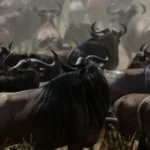
The cooler temperatures make movement easier, and prey animals become cautious. Zebras gather closely together. Wildebeests remain alert. Gazelles constantly scan their surroundings for danger hidden in the shadows.
Every sound suddenly matters.
For safari lovers, this is one of the most thrilling moments in Tanzania wildlife safaris because the Serengeti becomes alive in an entirely different way.
The Sounds of the African Night
One thing many travelers never forget about a Serengeti safari is the nighttime soundtrack.
Once darkness fully arrives, the silence is replaced by the raw voice of the wild.
You may hear:
- Lions roaring in the distance
- Hyenas laughing across the plains
- Crickets singing continuously
- Hippos grunting near rivers
- Elephants breaking branches in the dark
Inside safari camps and lodges, lanterns glow softly while guests gather around campfires sharing stories from the day. Above them, the African sky explodes with stars brighter than most people have ever seen.
Without city lights, the Milky Way becomes incredibly visible over the Serengeti.
For many visitors, this is the exact moment they fall in love with Africa forever.
The Beauty of Serengeti Safari Camps at Night
Luxury lodges, tented camps, and mid-range safari camps inside or near the Serengeti offer an experience unlike anywhere else in the world.
Imagine sitting beside a fire with a warm drink while hearing wild animals somewhere beyond the darkness. The feeling is exciting, peaceful, and humbling at the same time.
Some camps even allow you to hear lions roaring directly from your tent during the night.
This is not a zoo experience.
This is real wilderness.
Many travelers describe sleeping in the Serengeti as one of the most unforgettable experiences of their lives because nature never truly sleeps here.
Why the Serengeti Sunset Feels Different
There are beautiful sunsets all over the world. Beaches have sunsets. Mountains have sunsets. Cities have sunsets.
But the Serengeti sunset carries something deeper.
Maybe it is the endless open plains.
Maybe it is the knowledge that wild animals are moving freely around you.
Maybe it is the feeling of disconnecting from modern life and reconnecting with nature itself.
Whatever the reason, sunset in the Serengeti feels personal.
It reminds people to slow down. To breathe. To appreciate silence. To realize how small humans are compared to the beauty of the natural world.
Best Time to Experience Sunset in the Serengeti
The Serengeti offers incredible sunsets throughout the year, but each season creates a different atmosphere.
- June to October – Dry season with dramatic golden landscapes and excellent wildlife viewing.
- January to March – Green season and calving season, with beautiful skies and thousands of wildebeest calves.
- April to May – Fewer crowds and lush scenery after the rains.
- July to September – Famous for the Great Wildebeest Migration crossings.
Every season tells a different story in the Serengeti.
A Memory That Never Leaves You
Years after visiting Tanzania, many travelers may forget exact dates, hotel names, or even how many animals they saw.
But they never forget the feeling of watching the sun go down in the Serengeti.
Because in that moment, Africa stops being just a destination.
It becomes a feeling.
A feeling of freedom.
A feeling of wonder.
A feeling of being completely alive.
And long after the safari ends, part of your heart remains somewhere out there on the endless plains of the Serengeti, waiting for another sunset.