
Tarangire National Park: Why This Park is the Elephant Capital of Tanzania
The Must-See Northern Circuit Gem Famed for Giants and Baobabs
Tarangire National Park, located two hours southwest of Arusha, is known as the "Elephant Capital of Tanzania," boasting the largest concentration of African elephants in the country, with herds sometimes reaching up to 300 individuals. Its iconic landscape, dominated by ancient baobab trees and the lifeline Tarangire River, makes it a photographic paradise. Tarangire is also one of the few parks in the Northern Circuit offering specialized activities like Guided Walking Safaris and Night Game Drives, providing a distinct and immersive safari experience.
The Land of Giants: Why Tarangire is So Special
Tarangire National Park covers approximately 2,850 sq km and offers a dramatic contrast to the open plains of the Serengeti, characterized by unique features that attract an incredible amount of wildlife.
- Unmatched Elephant Concentration
Tarangire is the key dry-season refuge for the massive regional ecosystem. During the peak dry months:
- Massive Herds: Thousands of elephants migrate back into the park, congregating along the permanent waters of the Tarangire River. It is common to see herds of 100 to 300 elephants drinking, bathing, and interacting.
- The Dry Season Lifeline: As surface water vanishes outside the park, the elephants demonstrate remarkable survival behavior, often digging into the dry riverbed with their trunks and feet to access vital underground water, a sight rarely witnessed elsewhere.
- The Iconic Baobab Trees
The landscape of Tarangire is instantly recognizable due to the towering, surreal Baobab Trees (the Adansonia digitata), often called the "Tree of Life."
- These majestic trees, many hundreds of years old, dominate the savannah, creating stunning silhouettes, especially at sunset.
- The elephants feed on the bark and roots, demonstrating the profound co-existence between the flora and fauna of the park.
- Distinct Wildlife Species
While it hosts the Big Five (excluding the black rhino, which is rarely sighted), Tarangire offers excellent viewing of other species often hard to spot elsewhere:
- Predators: Healthy populations of lions (some known for tree-climbing), leopards, and cheetahs.
- Rare Antelopes: It is one of the few Northern parks where you can see the Fringe-eared Oryx and the long-necked Gerenuk.
- Birdlife: With over 550 recorded bird species, it is a birdwatcher's paradise, particularly around the extensive swamps.
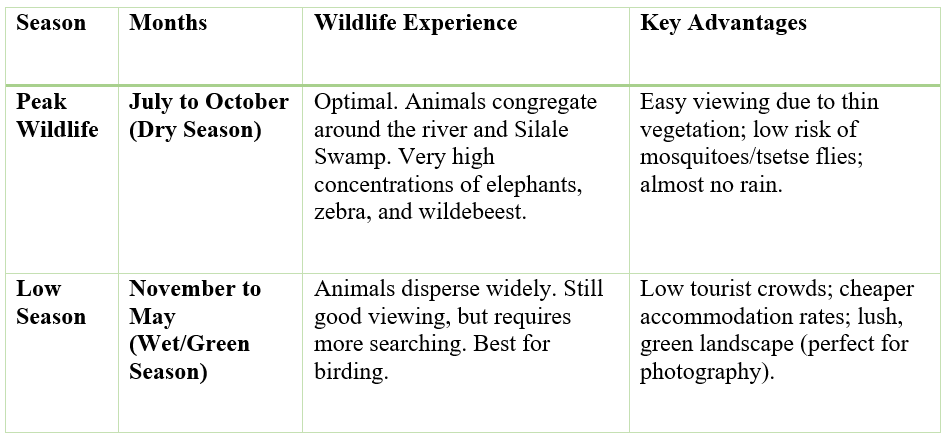
The Best Time to Visit Tarangire
Tarangire is a highly seasonal park. The best time to visit depends entirely on your priority:
Specialized Activities Only Available Here
Unlike the core areas of the Serengeti, Tarangire offers several non-vehicle based activities, which Trek Tanzania Safaris highly recommends:
- Guided Walking Safaris: Led by an armed ranger, walking safaris allow you to focus on the smaller details of the ecosystem—animal tracks, insects, and flora—offering a completely different, adrenaline-filled perspective.
- Night Game Drives: As one of the very few parks in the Northern Circuit to permit night drives, Tarangire gives you a chance to spot nocturnal species like African civets, genets, porcupines, and potentially leopards on the hunt.
- Hot Air Balloon Safaris: Available here as well, offering the opportunity to float silently over the elephant herds and the baobab landscape at sunrise.
Why You Should Include Tarangire
Tarangire National Park is the perfect, essential stop on any Northern Circuit itinerary, usually paired with Lake Manyara, the Ngorongoro Crater, and the Serengeti. If you want guaranteed sightings of massive elephant herds and crave adventurous activities outside of the standard game drive, Tarangire is non-negotiable.
Ready to walk among the giants? Contact Trek Tanzania Safaris today to design an itinerary that immerses you in the majesty of Tarangire.