

Is Tanzania Safe for Tourists? Your Guide to Health, Safety, and Travel Logistics
Essential Information for a Worry-Free Safari Adventure
Yes, Tanzania is generally safe for tourists, especially within the context of a professionally organized safari. The most popular tourist destinations, including the Serengeti, Ngorongoro Crater, and surrounding lodges, are extremely well-managed and safe. The primary risks for travelers are common urban petty crime (in cities like Dar es Salaam or Arusha) and health concerns like malaria and gastrointestinal issues, which can be mitigated with proper preparation, including consulting a travel doctor for required vaccinations and prophylaxis.
Part 1: Safety and Security (What to Know)
While your safari operator (Trek Tanzania Safaris) manages security within the parks, awareness in urban areas is key.
- Safety on Safari
- National Parks and Camps: Safari parks, lodges, and tented camps are considered very safe. You are always accompanied by armed rangers or professional guides outside of your accommodations. Following your guide's instructions is the absolute best way to ensure safety.
- Wildlife: The main "danger" is the wildlife itself. Never approach animals, leave your vehicle without permission, or walk around camp unescorted after dark (even if the camp is fenced).
- Safety in Cities and Towns
- Petty Crime: As with any major city worldwide, opportunistic crime (pickpocketing, bag snatching) can occur in busy areas of Arusha, Dar es Salaam, or Stone Town (Zanzibar).
- Tip: Leave valuables (expensive jewelry, watches) at home. Use a safe in your accommodation. Avoid walking alone after dark.
- Transport: Always use reputable, pre-booked transport arranged by your tour operator or hotel. Avoid unmarked taxis or public transport for long distances.
- Political Situation
- Political demonstrations are rare in tourist areas, but it’s wise to avoid large public gatherings and stay informed through reputable international news sources.
- Carry ID: Always carry a copy of your passport and visa (keep originals secure).
Part 2: Health and Medical Preparation (Crucial Planning)
Proper health preparation is the most important step for a safe Tanzania safari.
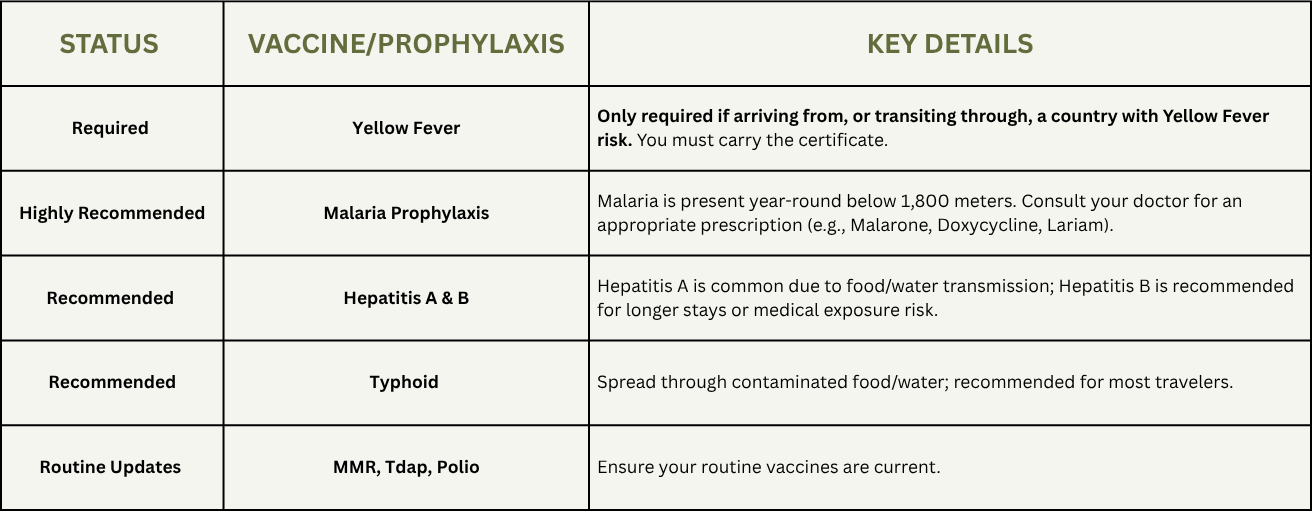
- Required and Recommended Vaccinations
Before traveling, consult a qualified travel health specialist, ideally 6–8 weeks before departure.
- Insect-Borne Disease Prevention
- Mosquitoes: Use DEET-based insect repellent (30%+) especially from dusk till dawn. Wear long sleeves and long trousers in the evenings (see our previous blog post!). Sleep under provided mosquito nets.
- Tsetse Flies: Found in certain wooded areas (e.g., Tarangire). They are attracted to dark colors (especially black and blue). Wear neutral, light-colored clothing (khaki, beige, olive) to deter them.
- Food and Water Safety
- Water: Never drink tap water. Only consume commercially bottled water from sealed containers. Use bottled water for brushing teeth.
- Food: Your safari lodges and reputable hotels adhere to high sanitation standards. Avoid ice and raw vegetables/salads outside of reputable establishments.
- Medical Emergency Planning
- Insurance: Comprehensive travel insurance is mandatory. Ensure your policy covers Emergency Medical Evacuation (e.g., Flying Doctors Society of Africa).
Part 3: Essential Travel Logistics
- Currency and Payments
- Local Currency: Tanzanian Shilling (TZS).
- Tourist Currency: US Dollars (USD) are widely accepted for safari packages, lodges, park fees, and tips.
- USD Rule: Only bring new, crisp USD notes printed in 2006 or later. Older or damaged notes will likely be rejected due to counterfeit concerns.
- Cards: Major lodges and city hotels accept Visa/Mastercard (often with a 3–5% surcharge). Use TZS cash for markets, small purchases, and tipping local community members.
- Visa Requirements
- A tourist visa is required for most nationalities (US citizens pay $100; most others pay $50).
- You can apply for an e-Visa online in advance (recommended to save time) or obtain a visa upon arrival at major entry points (Kilimanjaro-JRO, Dar es Salaam-DAR, Zanzibar-ZNZ).
- Passport: Must be valid for at least six months beyond your intended departure date and have at least one blank page.